
Remember when making a professional video meant hiring a production crew, renting equipment, and spending thousands of dollars before a single frame was shot? That world is gone. AI video generation 2026 has completely rewritten those rules — and the pace of change is honestly hard to keep up with, even if you’re paying close attention.
I’ve spent the last several months testing, breaking, and building with AI video tools, and what I can tell you is this: AI video generation in 2026 is not a “coming soon” technology anymore. It’s here. It’s working. And if you’re not using it — or at least understanding it — you’re already behind the curve.
This article covers everything: what’s actually changed, which tools are winning, where the limitations still live, and what’s coming next. No hype. No filler. Just the real picture.
Table of Contents
The State of AI Video Generation 2026: How Far We’ve Actually Come
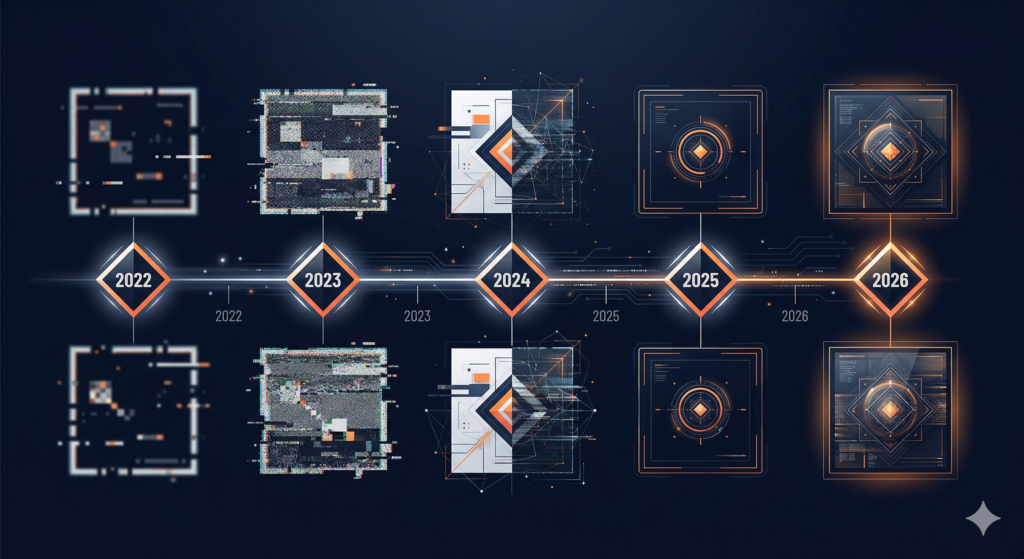
Three years ago, AI-generated video looked like a fever dream — blurry faces, melting hands, backgrounds that shifted mid-shot. Today, AI video generation 2026 is producing content that routinely fools trained eyes on first watch.
The leap happened fast, and it wasn’t just one breakthrough. It was several converging at once.
Diffusion models got dramatically more stable. Temporal consistency — the ability for an AI to maintain coherent motion between frames — finally reached commercial-grade quality. And compute costs dropped enough that real-time or near-real-time generation became viable for everyday creators, not just research labs with million-dollar GPU clusters.
According to a 2026 report from Gartner, over 47% of digital marketing teams now use some form of AI video generation in their content pipeline. That number was under 12% just two years ago. That’s not a trend. That’s a structural shift in how content gets made.
What’s particularly striking about AI video generation in 2026 is that the gap between “AI-made” and “human-made” video has narrowed to the point where the distinction is becoming less relevant than the question: does it work for the audience?
The Major Players Shaping AI Video Generation in 2026
The competitive landscape for AI video generation 2026 has consolidated considerably from the wild experimentation of 2023–2024. A few serious players have emerged, each with a distinct approach.
Sora (OpenAI) remains the benchmark for cinematic quality. It produces long-form, temporally consistent video from text prompts at a quality level that, frankly, still surprises me every time I use it on a complex scene. The downside? It’s computationally expensive and access is still gated for high-volume use cases.
Runway Gen-4 has become the go-to for professional video editors who want AI assistance without losing creative control. Its image-to-video and video-to-video features are mature, precise, and integrate well into existing post-production workflows.
Kling AI and Hailuo — both from Chinese AI labs — have emerged as serious global competitors, offering quality that rivals Western tools at significantly lower price points. For independent creators and small studios, these tools have been genuinely game-changing.
Pika Labs carved out a strong niche in short-form social content, with fast generation speeds and a UI that non-technical creators actually enjoy using.
And then there’s Google’s Veo 2, which is quietly one of the most impressive implementations of AI video generation 2026 in terms of physical realism — water, cloth, and lighting behavior feel unusually accurate.
The honest takeaway? There’s no single “best” tool. The right choice depends entirely on your use case, budget, and workflow. What matters is that the quality floor across all these platforms has risen dramatically.
Text-to-Video: The Feature That Changed Everything
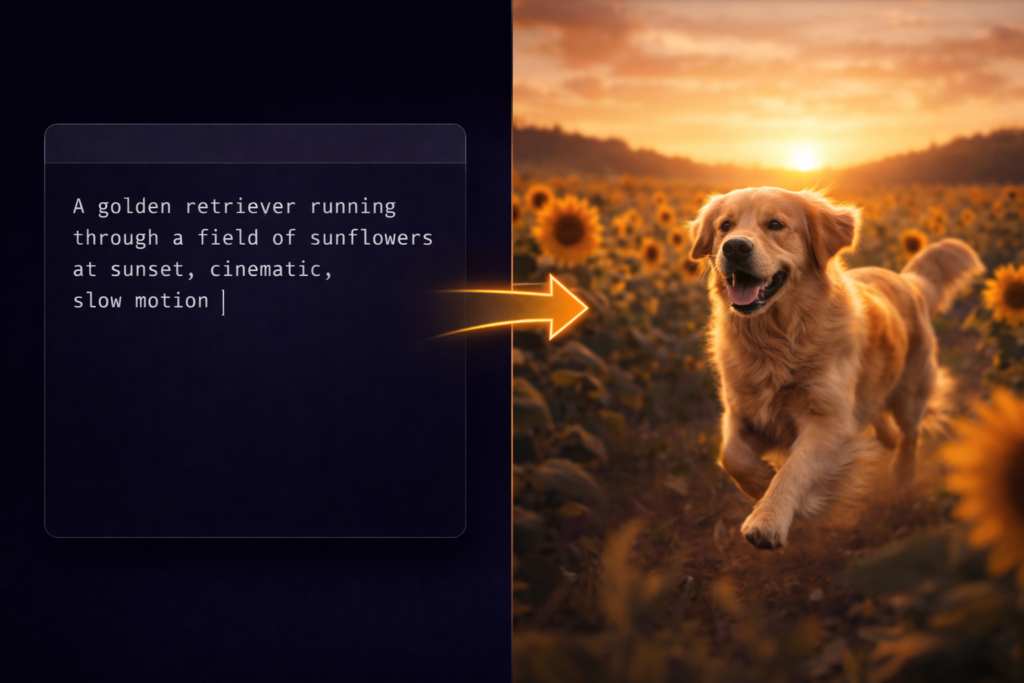
If you had to point to the single capability that made AI video generation 2026 accessible to non-technical users, it’s text-to-video. The idea is exactly what it sounds like: you describe a scene in plain language, and the model generates a video clip.
“A golden retriever running through a field of sunflowers at sunset, cinematic, slow motion.” Hit generate. Thirty seconds later — you have that exact shot.
For marketers, educators, and content creators, this is enormous. No location scouting. No talent fees. No scheduling conflicts. Text-to-video AI video generation in 2026 means a single creator can produce content that previously required an entire production team.
But here’s what I want to be honest about: text-to-video is incredible for establishing shots, b-roll, and atmospheric content. It’s still inconsistent for anything requiring specific human faces, precise product accuracy, or complex narrative continuity over multiple scenes. Those use cases still benefit from human direction and editing — often with AI as a co-pilot rather than the driver.
The best results from AI video generation 2026 text-to-video tools come when you treat prompt writing like a skill — because it is. Vague prompts get generic results. Detailed, cinematography-informed prompts get something genuinely useful.
AI Video Generation 2026 for Business: Real Use Cases, Real Results
Let’s get practical. Where is AI video generation in 2026 actually being used professionally, and what results are companies seeing?
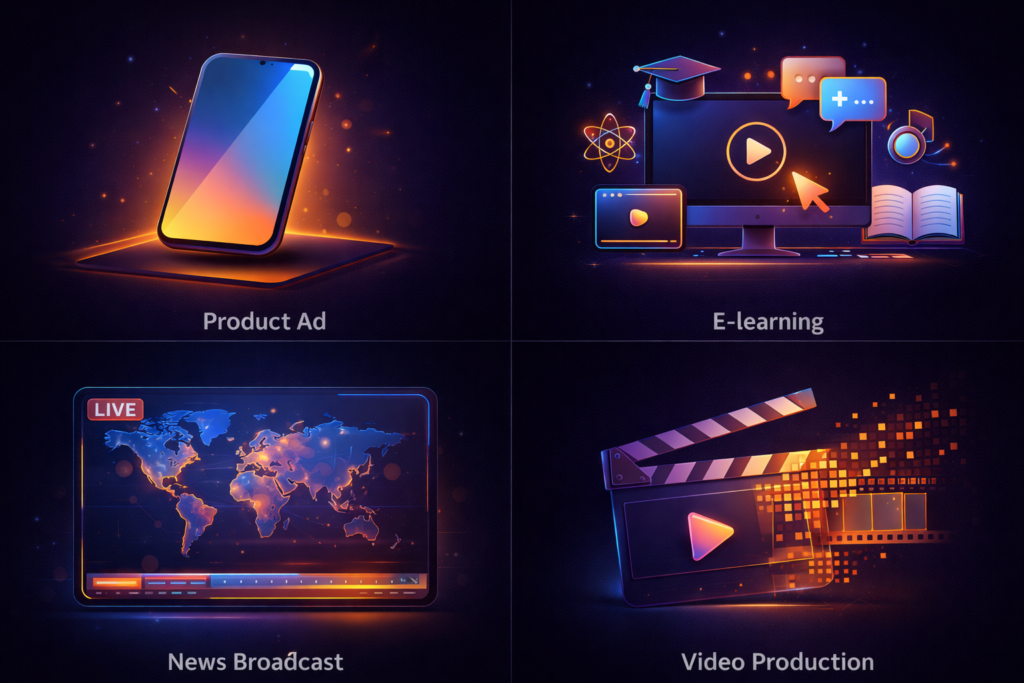
Marketing and advertising is the biggest category by volume. Brands are using AI video generation to produce product demos, social ads, and localized content at scale. A campaign that used to require five separate shoots for five regional markets can now be generated in one afternoon — same script, different visual styles or languages overlaid.
E-learning and training is the second fastest-growing use case. Companies are replacing static slide decks and expensive talking-head video productions with AI-generated explainer content. The quality isn’t always cinema-level, but for corporate training purposes, it’s more than sufficient — and the time savings are massive.
Entertainment and independent film is where things get philosophically interesting. Independent filmmakers are using AI video generation 2026 tools to pre-visualize scenes, generate concept footage for pitch decks, and even produce entire short films with micro-budgets. Several AI-assisted short films made significant noise at festivals in 2025.
News and journalism organizations are using AI video generation for illustrative content — visualizing historical events, generating explainer sequences, or producing imagery for stories where footage simply doesn’t exist.
Here’s a comparison of primary business use cases and their current AI video maturity level:
| Use Case | AI Maturity Level | Human Oversight Needed |
|---|---|---|
| Social media b-roll | High ✅ | Minimal |
| Product marketing ads | Medium-High ✅ | Some editing |
| Corporate training video | Medium ✅ | Script + review |
| News illustration | Medium ✅ | Editorial judgment |
| Narrative film/TV | Low-Medium ⚠️ | Heavy direction |
| Live event coverage | Not viable ❌ | Full human crew |
The Tools, Features, and Workflows That Actually Matter
Working with AI video generation 2026 day-to-day means understanding not just which platforms to use, but which features to prioritize. Here are the capabilities that separate genuinely useful tools from flashy demos:
- Temporal consistency controls — the ability to lock a character, object, or setting across multiple generated clips
- Camera motion presets — dolly, pan, zoom, orbit controls that give generated footage cinematographic intentionality
- Inpainting and outpainting — editing specific regions of existing video without regenerating the whole clip
- Audio sync and lip-sync — AI tools that match generated or dubbed dialogue to on-screen movement with increasing accuracy
- Style locking — maintaining a consistent visual aesthetic across an entire video project
The workflows that professionals are finding most effective in AI video generation 2026 aren’t “generate everything from scratch.” They’re hybrid: shoot what you need with cameras, generate what’s impractical or expensive with AI, and edit everything together in a timeline where the source doesn’t matter — only the output quality does.
The Ethical and Legal Landscape Nobody Wants to Talk About
Here’s the uncomfortable part of AI video generation 2026 that most articles gloss over. It’s important, and you need to know it.
Deepfakes and synthetic media are a serious, growing problem. The same technology that lets a marketer generate product videos can be used to fabricate video of real people saying things they never said. In 2026, several countries have enacted or are in the process of enacting legislation specifically targeting non-consensual synthetic media.
The US passed the NO FAKES Act framework in late 2025, which places significant liability on platforms distributing non-consensual AI video of real individuals. The EU’s AI Act has strict provisions around biometric data and synthetic media disclosure.
What this means for legitimate users: label AI-generated content clearly. Most major platforms — YouTube, TikTok, Instagram — now require disclosure when AI video generation has been used substantially in a piece of content. Non-disclosure can result in content removal or account penalties.
Copyright is also genuinely unresolved. The training data questions around AI video models are still working through courts in multiple jurisdictions. As of now, the safest position is: don’t use AI video generation 2026 tools to produce content that closely mimics identifiable human creators’ styles without permission.
This works for most professional use cases, but if you’re in advertising or journalism, having a legal review of your AI content policy is worth the time investment.
What AI Video Generation Still Can’t Do (Yet)
I want to give you the honest picture. AI video generation in 2026 is remarkable, but it has real limitations that matter in practice.
Long-form narrative coherence is still hard. Generate a 90-second clip with consistent characters, lighting, and story logic, and you’ll likely need multiple takes and careful editing to stitch something coherent. AI video excels at short, self-contained moments — not sustained storytelling.
Precise control over human faces remains inconsistent. Generating a specific person (with their consent and likeness rights properly cleared) across multiple scenes reliably is still a challenge. The technology exists, but it’s finicky and expensive at scale.
Authentic emotion is still elusive. Human actors bring subtext, micro-expression, and emotional intelligence to performance that AI-generated faces replicate poorly under scrutiny. For anything where emotional authenticity is central to the message, human performance still wins.
Real-time AI video generation 2026 at broadcast quality doesn’t exist yet. Generation still takes time — seconds to minutes depending on length and quality settings. True real-time generation at professional resolution is likely 2–3 years away.
How to Start Using AI Video Generation Right Now
You don’t need to overhaul your entire workflow to start benefiting from AI video generation 2026. Here’s where to actually begin:
- Pick one specific use case — b-roll for a marketing video, an explainer sequence, a product visualization. Don’t try to replace your entire production process on day one.
- Start with Runway or Pika — both have generous free tiers and interfaces designed for non-specialists. Learn what good prompting feels like before spending money.
- Study cinematography basics — understanding shot types, lighting terminology, and camera movement makes your text prompts dramatically more effective.
- Build a prompt library — save the prompts that generate great results. This becomes a genuine business asset over time.
- Integrate gradually — use AI-generated footage alongside real footage in your edits. Most audiences won’t notice the seam if the quality is right and the edit is clean.
The professionals getting the most out of AI video generation 2026 aren’t the ones who went all-in overnight. They’re the ones who started small, learned the tools deeply, and expanded usage as confidence and quality improved.
The Future: Where AI Video Generation Goes From Here
AI video generation in 2026 is impressive. But the trajectory suggests we’re still in the early innings.
By 2027–2028, expect real-time generation at near-broadcast quality. Expect AI systems that maintain character and narrative consistency across full-length features. Expect personalized video content generated on-demand for individual viewers — a product demo that shows your specific use case, in your industry, with your name on the whiteboard.
The bigger shift isn’t technical — it’s creative. As AI video generation tools become more capable and accessible, the scarce resource won’t be the ability to produce video. It’ll be the taste, judgment, and storytelling intelligence to know what to create and why it will matter to an audience.
That’s not going away. And honestly, that’s what should excite you about where this is all heading.
Frequently Asked Questions About AI Video Generation 2026
Q1: What is AI video generation, and how does it work in 2026? AI video generation uses deep learning models — primarily diffusion models and transformer architectures — to create video content from text prompts, images, or existing video clips. In 2026, these models generate temporally consistent, high-resolution footage by predicting realistic motion, lighting, and visual detail frame-by-frame based on training from massive video datasets.
Q2: Which is the best AI video generation tool in 2026? There’s no single best tool — it depends on your use case. Sora leads for cinematic quality. Runway Gen-4 is best for professional editing workflows. Pika and Kling are strong for social content and cost-efficiency. Google’s Veo 2 excels in physical realism. Most serious creators use two or three tools depending on the project.
Q3: Is AI-generated video legal to use commercially in 2026? Generally yes, for original AI-generated content. However, using real people’s likenesses without consent is illegal in many jurisdictions under new synthetic media laws. AI video used commercially should be labeled as AI-generated on platforms that require disclosure, and you should ensure any training-data-derived style mimicry doesn’t violate copyright. When in doubt, consult a media lawyer.
Q4: Can AI video generation replace human videographers and editors? Not entirely — and not soon. AI video generation in 2026 handles b-roll, illustration, and scalable content production extremely well. But live event coverage, narrative filmmaking, authentic human performance, and complex long-form storytelling still require human creative direction. The more realistic framing is “AI as a powerful assistant” rather than a replacement.
Q5: How much does AI video generation cost in 2026? Costs vary widely. Most platforms offer free tiers with limited monthly credits and paid plans ranging from $15–$150/month for individual creators. Enterprise and API access for high-volume generation can run significantly higher. Cloud compute costs have dropped substantially since 2024, making professional-quality generation accessible at price points that would have been unimaginable two years ago.
Q6: Do I need technical skills to use AI video generation tools in 2026? No — and this is one of the most significant changes from earlier generations of AI video tools. Most 2026 platforms are designed for non-technical users, with intuitive interfaces and clear prompt guidance. The main skill worth developing is prompt writing — the ability to describe scenes with enough visual and cinematographic specificity to get consistent, high-quality outputs.