
You watched a video yesterday. You were almost certain it was real. But was it?
That question — once reserved for conspiracy theorists and overly cautious journalists — is now something every professional, every voter, every internet user should be asking in 2026. AI deepfake detection 2026 isn’t a niche technical topic anymore. It sits at the intersection of national security, personal reputation, media trust, and everyday digital life. And the uncomfortable truth is: the fakes are getting better faster than most detection systems are.
I’ve been tracking this space closely, and what I can tell you is that AI deepfake detection in 2026 is a genuine arms race — not a metaphor, not clickbait. The same AI breakthroughs that made synthetic media frighteningly convincing are now being turned back on themselves to build detection systems. The outcome of that race matters enormously to everyone who consumes digital content — which, in 2026, is essentially all of us.
This guide covers every angle: how detection works, which tools are winning, where the gaps still are, and what you can actually do about it.
Table of Contents
The Deepfake Problem in 2026: Bigger Than Most People Realise
Let’s start with the numbers, because they’re sobering.
According to a 2025 report from Deeptrace Labs, the volume of deepfake video content online increased by over 900% between 2022 and 2025. That’s not a measurement error. The democratisation of AI video generation tools — the very tools covered in widespread media coverage throughout 2024 and 2025 — had an inevitable dark side: the same accessibility that empowers creators also empowers bad actors.
The targets in 2026 aren’t just celebrities. AI deepfake detection 2026 researchers are now tracking synthetic media attacks on corporate executives, election candidates, financial markets, and ordinary private individuals. A 2025 Gartner analysis found that 60% of enterprise security teams reported encountering AI-generated synthetic media in fraud or social engineering attempts over the previous 12 months.
Here’s what changed most dramatically: it used to take significant technical skill and expensive hardware to produce a convincing deepfake. In 2026, it takes a smartphone, a free app, and about four minutes. The production barrier collapsed. That’s why AI deepfake detection in 2026 moved from “interesting research problem” to “urgent infrastructure challenge” practically overnight.
The damage is real and measurable. Synthetic media has been used to manipulate stock prices, fabricate evidence in legal proceedings, destroy personal reputations, and interfere with democratic elections. This isn’t theoretical. These events have already happened — repeatedly.
How AI Deepfake Detection Actually Works in 2026
Most people assume deepfake detection works the way human intuition does — spotting something “off” about a face or voice. The reality is far more technical, and far more interesting.
AI deepfake detection 2026 systems primarily operate by learning the invisible signatures that synthetic generation leaves behind. When an AI model generates a face, it introduces statistical patterns — tiny inconsistencies in pixel distribution, lighting physics, facial geometry, and temporal motion — that differ from organic video at a level human eyes can’t reliably perceive but machines can.
The main detection approaches currently in use include:
- Frequency-domain analysis — examining the spectral fingerprints of video at a sub-pixel level, where GAN (Generative Adversarial Network) artifacts appear as repeating patterns invisible to the naked eye
- Facial geometry and landmark tracking — monitoring micro-expressions, eye blink patterns, and facial muscle movements for biological inconsistencies that AI generators still struggle to replicate perfectly
- Physiological signal detection — detecting rPPG (remote photoplethysmography), the subtle skin colour variations caused by blood flow that appear in real human video but are absent or irregular in synthetic faces
- Audio-visual synchronisation analysis — measuring the precise alignment between lip movements and audio waveforms, where AI-generated content frequently shows detectable phase mismatches
- Provenance and metadata forensics — examining digital watermarks, compression artefacts, and file metadata for signs of AI generation or post-processing
The most capable AI deepfake detection 2026 systems don’t rely on a single method. They’re ensemble systems — running multiple detection pathways simultaneously and combining confidence scores to produce a final verdict. This layered approach is what separates commercial-grade detection from academic demos.
The Leading AI Deepfake Detection Tools in 2026
The market for AI deepfake detection in 2026 has matured considerably from the scattered research projects of 2022–2023. Several serious platforms now offer enterprise-grade detection capabilities.
Microsoft Azure AI Content Safety has deepfake detection integrated into its broader content moderation suite, making it the default choice for large organisations already in the Microsoft ecosystem. It handles both image and video analysis at scale with API-first architecture.
Sensity AI (formerly Deeptrace) remains one of the most respected dedicated deepfake detection platforms, particularly for video analysis. Their threat intelligence layer — which tracks synthetic media campaigns across the open web — makes them especially valuable for security and journalism teams.
Intel’s FakeCatcher uses the rPPG biological signal approach and claims real-time detection capability. In controlled tests, it performs impressively on standard deepfake formats, though adversarial synthetic media specifically engineered to fool it presents challenges.
Reality Defender has emerged as a strong enterprise choice, particularly for financial services and government clients. Their platform analyses content across modalities — video, audio, image, and text — which matters as multi-modal synthetic attacks become more common.
Hive Moderation provides accessible API-based detection that social media platforms and mid-sized organisations use for content screening at volume. The price-to-performance ratio is strong for high-throughput use cases.
Here’s a practical comparison of the major platforms:
| Platform | Video Detection | Audio Detection | Real-Time | Best For |
|---|---|---|---|---|
| Microsoft Azure AI | ✅ Yes | ✅ Yes | Partial | Enterprise at scale |
| Sensity AI | ✅ Yes | Limited | ❌ No | Security & journalism |
| Intel FakeCatcher | ✅ Yes | ❌ No | ✅ Yes | Live video feeds |
| Reality Defender | ✅ Yes | ✅ Yes | Partial | Finance & government |
| Hive Moderation | ✅ Yes | ✅ Yes | ✅ Yes | Social platforms |
No single tool catches everything. AI deepfake detection 2026 practitioners consistently recommend layered verification — running content through multiple systems when stakes are high.
AI Deepfake Detection 2026 Across Different Industries
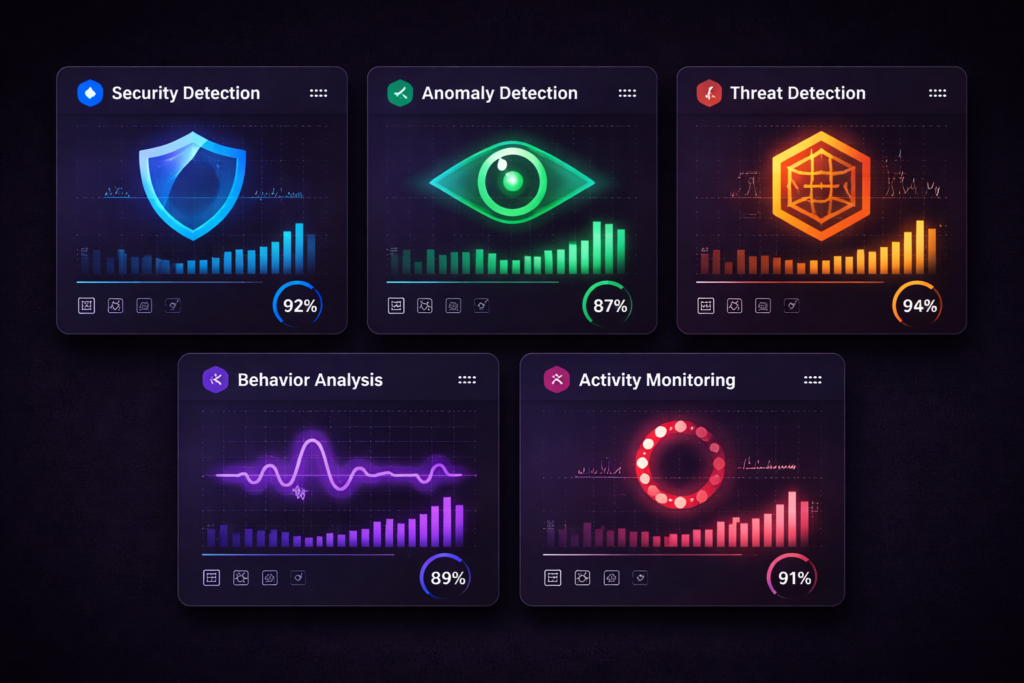
The urgency and application of AI deepfake detection in 2026 looks very different depending on which industry you’re in. Here’s how the challenge is playing out sector by sector.
Media and Journalism
For journalists and news organisations, AI deepfake detection 2026 has become a fundamental verification competency — as important as traditional source corroboration. The AP, Reuters, and BBC have all integrated synthetic media detection into their editorial workflows. The challenge is speed: breaking news environments don’t always allow the time that thorough deepfake analysis requires.
The Coalition for Content Provenance and Authenticity (C2PA) — backed by Adobe, Microsoft, and major news organisations — has pushed hard in 2026 for provenance-based authentication, essentially a digital chain of custody for media that can flag whether content has been AI-generated or manipulated.
Financial Services
Banks and financial institutions are dealing with a sharp rise in AI-generated identity fraud. Voice deepfakes are being used to bypass phone-based authentication systems. Video deepfakes are appearing in KYC (Know Your Customer) verification flows. AI deepfake detection 2026 in financial services focuses heavily on real-time liveness detection — confirming that the person on a video call is genuinely present and genuinely human.
Politics and Elections
This is arguably where the stakes are highest. AI-generated videos of political figures saying things they never said have been documented in elections across multiple countries in 2024 and 2025. AI deepfake detection in 2026 at the electoral level involves not just technology but policy — many jurisdictions now require platform-level detection and labelling of synthetic political content within tight time windows.
Legal and Law Enforcement
Courts are increasingly encountering AI-generated evidence — fabricated audio recordings, synthetic video footage, manipulated images. Forensic AI deepfake detection 2026 tools are being certified for evidentiary use, and expert witnesses specialising in synthetic media forensics are now a recognised professional category in multiple legal systems.

The Adversarial Problem: Why Detection Is So Hard
Here’s the core tension that makes AI deepfake detection 2026 genuinely difficult: every time detection improves, generation adapts.
This is the adversarial dynamic at the heart of the problem. Generative AI and detection AI are trained in opposition to each other. When researchers publish a new detection method, bad actors — and legitimate AI labs improving their generation quality — have a roadmap for what artifacts to eliminate from their outputs.
In 2026, there are already deepfake generation systems specifically optimised to defeat known detection architectures. These “adversarial deepfakes” are generated with explicit anti-detection objectives baked into the training process. Against standard detection systems, they perform alarmingly well.
The honest reality of AI deepfake detection 2026: no detection system has a 100% accuracy rate. The best commercial systems achieve 90–95% accuracy on standard synthetic media. Against adversarially-optimised deepfakes, that number drops — sometimes significantly. This doesn’t mean detection is useless. It means it’s a probabilistic tool, not a definitive verdict machine, and it needs to be used with that understanding.
Detection is most reliable when combined with contextual verification — cross-referencing source credibility, checking provenance metadata, and applying basic journalistic scepticism about why a particular piece of content exists and who benefits from its distribution.

Legislation and Standards Shaping AI Deepfake Detection 2026
The legal and regulatory environment around AI deepfake detection in 2026 has moved faster than many expected, though not as fast as the technology itself.
In the United States, the NO FAKES Act established federal liability for non-consensual synthetic media involving real individuals. Several states — California, Texas, New York — have specific deepfake legislation covering political content and non-consensual intimate imagery.
The European Union’s AI Act, fully in effect from 2026, mandates disclosure labelling for AI-generated content and places significant obligations on both creators and platforms. Non-compliance penalties are substantial — up to 6% of global annual revenue for large organisations.
In Asia, China introduced synthetic media regulations in 2022 that have been progressively strengthened. South Korea and Japan have enacted their own disclosure and detection requirements.
The practical implication for organisations using or distributing digital media: AI deepfake detection 2026 compliance is no longer optional in most major markets. It’s a legal requirement with teeth.

What You Can Do Right Now: A Practical Detection Checklist
You don’t need enterprise software to apply intelligent synthetic media scepticism in your daily professional life. Here are actionable steps anyone can take:
- Verify the source before the content — ask who published this, why now, and what they stand to gain. Context often reveals fakery before analysis does
- Check C2PA provenance metadata — an increasing number of authentic media files carry verifiable digital provenance. If it’s missing on content from a professional source, that’s a flag worth investigating
- Use free detection tools for suspicious content — platforms like Hive Moderation offer limited free access. For anything high-stakes, run it through at least two systems
- Watch for tell-tale generation artifacts — unnatural eye blinking rhythms, inconsistent lighting on hair and ears, audio that doesn’t quite match mouth movement, and backgrounds that shimmer slightly on movement remain common failure points even in 2026 deepfakes
- Apply reverse image and video search — Google Lens and other tools can surface whether footage has been re-used or manipulated from original sources
- Be especially sceptical of emotionally provocative content — synthetic media is most often deployed to trigger strong emotional reactions. If something makes you immediately angry, frightened, or certain, apply extra scrutiny before sharing
The most powerful deepfake detection tool in 2026 is still critical thinking. Technology augments human judgement — it doesn’t replace it.

The Future of AI Deepfake Detection Beyond 2026
Where does this go from here? The trajectory of AI deepfake detection in 2026 points toward several significant developments in the near term.
Hardware-level authentication is gaining momentum. Devices that cryptographically sign content at the point of capture — embedding unfakeable provenance at the sensor level — could create a trusted media ecosystem where authenticity is verifiable by default rather than analyzed after the fact.
Universal content provenance standards — built on C2PA and similar frameworks — are being pushed by a coalition of major technology companies, news organisations, and governments. If adoption reaches critical mass, the burden of proof for digital media could shift: content without provenance becomes inherently suspect rather than content with detectable AI artifacts.
Multimodal detection is advancing rapidly. Next-generation systems analyse video, audio, text metadata, and behavioural biometrics simultaneously — building a holistic authenticity profile rather than checking individual signals in isolation.
The arms race won’t end. But AI deepfake detection 2026 and beyond is increasingly about building systemic trust infrastructure — not just better algorithms. The goal isn’t a perfect detector. It’s an ecosystem where fakes are harder to distribute, easier to flag, and costlier to produce without accountability.
Frequently Asked Questions About AI Deepfake Detection 2026
Q1: What exactly is AI deepfake detection, and how does it work in 2026? AI deepfake detection in 2026 refers to automated systems that analyse video, audio, or image content to determine whether it has been synthetically generated or manipulated using AI. Detection works by identifying invisible statistical patterns — in pixel distributions, facial geometry, physiological signals, and audio-visual synchronisation — that AI generation leaves behind and that differ detectably from authentic human-captured content.
Q2: How accurate are AI deepfake detection tools in 2026? The best commercial systems achieve 90–95% accuracy on standard deepfakes. However, adversarially-optimised synthetic media — specifically designed to evade detection — can reduce that accuracy significantly. No detection system is infallible, which is why layered verification combining multiple tools and human contextual judgement remains the professional standard.
Q3: Can you detect deepfakes just by watching them carefully? Increasingly, no. In 2026, the quality of synthetic media has reached a level where trained human observers regularly fail to distinguish deepfakes from authentic footage. Detection requires algorithmic analysis of signals operating below the threshold of human visual perception — particularly in frequency-domain and physiological signal analysis. Human scepticism remains valuable for contextual assessment, but is insufficient as a standalone detection method.
Q4: Which industries are most at risk from deepfakes in 2026? Financial services (identity fraud, voice authentication bypass), politics and elections (disinformation campaigns), journalism (fabricated evidence), legal proceedings (synthetic evidentiary content), and personal reputation (non-consensual synthetic imagery) are the highest-risk sectors. However, the threat surface is broadening — any domain where video or audio evidence carries significant weight is vulnerable.
Q5: Is creating deepfakes illegal in 2026? It depends on jurisdiction and intent. In most major markets, creating non-consensual deepfakes of real individuals — particularly sexual content or malicious disinformation — is explicitly illegal. The US NO FAKES Act, EU AI Act, and various national laws establish liability. Creating synthetic media for clearly labelled creative or entertainment purposes generally remains legal, though disclosure requirements vary by platform and jurisdiction.
Q6: What should organisations do to protect themselves from deepfake threats in 2026? Organisations should implement AI deepfake detection tools in verification workflows (especially for KYC, authentication, and media intake), train staff on synthetic media awareness, establish clear content verification protocols for high-stakes communications, adopt C2PA provenance standards for their own published content, and maintain up-to-date incident response plans for synthetic media attacks targeting their leadership or brand.